
Call us 8:00am - 8:00pm
079-2273 3345 / 6353949804
Monday to Friday
8:00am - 8:00pm
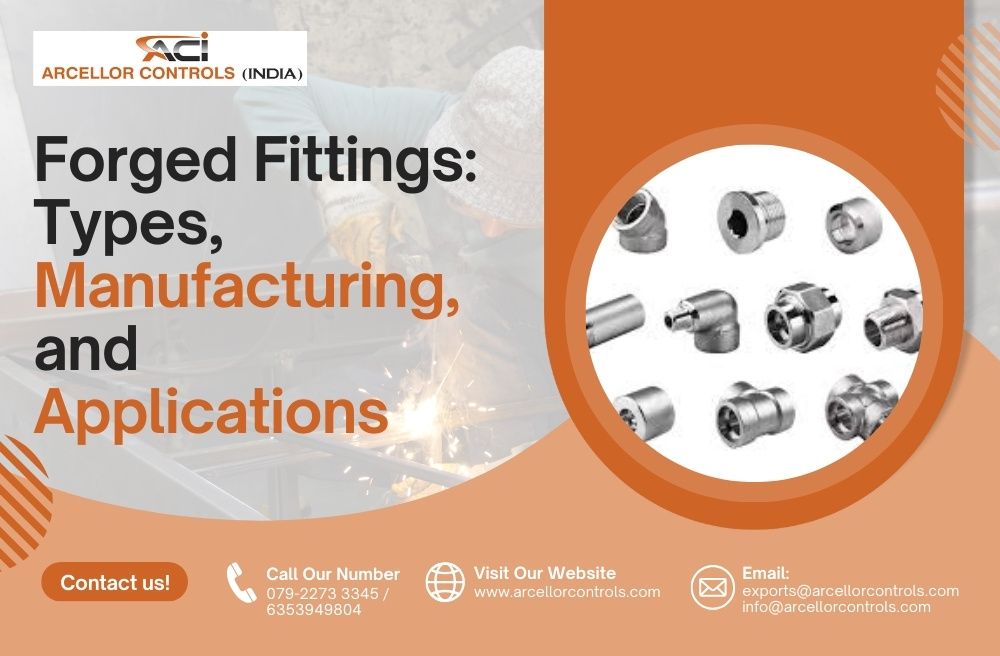
Forged Fittings: Types, Manufacturing and Applications
In industries ranging from oil and gas to power generation and chemical processing, ensuring the integrity of piping systems is critical. At the heart of these systems are forged fittings — precision-engineered components that connect, redirect, reduce, and terminate piping systems under high pressure and extreme conditions. Whether you are specifying components for a major industrial project or sourcing reliable products for routine maintenance, understanding forged fittings and their value is essential.
What Are Forged Fittings?
Forged fittings are components made by shaping heated metal under high pressure, typically using forging dies. This process aligns the metal’s grain structure and enhances mechanical properties such as strength, toughness, and resistance to fatigue and shock. Compared to cast or welded alternatives, forged fittings offer superior structural integrity, making them ideal for demanding applications.
These components include elbows, tees, reducers, couplings, crosses, caps, and more — all designed to meet stringent industrial standards.
Key Advantages of Forged Fittings
Forged fittings are widely preferred due to several distinct advantages:
- Superior Strength and Durability: The forging process eliminates internal voids and imperfections, resulting in components that can withstand high pressure and thermal stress.
- Enhanced Safety: In high-pressure environments such as oil & gas pipelines, safety is non-negotiable. Forged fittings maintain performance even under extreme conditions.
- Precision and Consistency: Consistent dimensional accuracy is vital for proper system assembly, reducing leaks and maintenance costs.
- Wide Material Selection: From carbon steel to stainless steel and alloy grades, forged fittings are available in materials suited for corrosive, high-temperature, or high-pressure environments.
For these reasons, industries trust forged fittings suppliers who can deliver quality and compliance with international codes such as ASME, ANSI, ASTM, and API.
Common Types of Forged Fittings
Understanding the types of forged fittings helps engineers and procurement teams specify the correct components for their systems. Below are the most commonly used types:
1. Elbows
Elbows change the direction of a pipeline, typically available in 45°, 90°, or 180° configurations. They help route piping in tight spaces without compromising flow efficiency.
2. Tees
Tees enable the branching of one line into two. They are essential in systems where distribution or diversion of fluid flow is required, such as in water distribution and chemical processing plants.
3. Reducers
Reducers are used to connect pipes of different diameters. They come in concentric and eccentric configurations to suit varying installation needs.
4. Couplings
Couplings join two pipes of the same diameter. They are simple yet critical components used across industries.
5. Bushings and Plugs
Bushings reduce size in threaded applications, while plugs are used to seal pipe ends, ensuring leak-free systems.
Each of these forged fittings is manufactured to precise tolerances and strict quality standards, making them reliable for both new installations and retrofit projects.
Manufacturing Process of Forged Fittings
The manufacturing of forged fittings involves several controlled steps to achieve the desired mechanical properties and dimensions:
1. Material Selection
The first step is choosing the right raw material based on application requirements. Common grades include carbon steel (e.g., ASTM A105), alloy steel (e.g., ASTM A182 F11/F22), and stainless steel (e.g., ASTM A182 F304/F316).
2. Heating and Forging
Billets or bars of steel are heated to a specific temperature and then forged using mechanical or hydraulic presses. The metal is shaped under extreme pressure to form the required fitting shape.
3. Trimming and Heat Treatment
Excess material is trimmed, and the component undergoes heat treatment to refine its internal structure and mechanical properties. This step improves hardness and toughness.
4. Machining and Finishing
Precision machining ensures the component meets dimensional specifications. Surface finishing, such as polishing or coating, enhances corrosion resistance and appearance.
5. Inspection and Testing
Quality assurance includes dimensional checks and mechanical testing, including pressure testing and non-destructive examinations (NDE). Only fittings that meet industry standards are released for supply.
Because of the rigorous manufacturing process, buyers prefer sourcing forged fittings from an experienced forged fittings manufacturer and forged fittings supplier in India who can guarantee traceability and compliance.
Applications of Forged Fittings
Forged fittings find use in a wide range of sectors due to their durability and reliability:
1. Oil and Gas Industry
From offshore platforms to refineries, forged fittings handle high pressure, extreme temperatures, and corrosive environments, making them indispensable in pipelines and processing systems.
2. Power Generation
In thermal and nuclear power plants, piping systems carry steam, water, and gases. Forged fittings ensure safe and efficient operation over long service cycles.
3. Petrochemicals and Chemicals
Highly corrosive fluids and complex piping networks demand fittings that can perform without failure under severe conditions.
4. Pharmaceuticals and Food Processing
Hygienic piping requiring clean and contamination-free environments utilize stainless steel forged fittings for their corrosion resistance and smooth finish.
5. Construction and Infrastructure
Municipal water systems, HVAC installations, and industrial facilities rely on forged fittings for secure and enduring pipeline connections.
Choosing the Right Forged Fittings Supplier
Selecting a reliable forged fittings supplier is as important as choosing the right product. Here’s what to look for:
- Manufacturing Expertise
A reputable forged fittings manufacturer will have strong technical capabilities, advanced machinery, and skilled engineers to deliver consistent quality.
- Quality Certifications
Look for suppliers whose products adhere to international standards such as ASME, ANSI, API, and ISO certifications. These certifications ensure fit, performance, and safety.
- Comprehensive Product Range
Suppliers with wide stock availability can provide elbows, tees, reducers, couplings, and custom fittings to meet varied project demands.
- Timely Delivery and Support
Efficient logistics and customer support ensure your projects stay on schedule. A dedicated forged fittings dealer will offer tracking and post-purchase assistance.
- Competitive Pricing
While quality should never be compromised, competitive pricing and value-added services from a forged fittings supplier in India help reduce project costs without sacrificing performance.
Why Choose Arcellorcontrols for Forged Fittings?
At Arcellorcontrols, we are a trusted forged fittings manufacturer, supplier, and dealer known for uncompromising quality and service excellence. With decades of industry experience and a wide distribution network, we cater to clients across India and internationally.
Our products are engineered to deliver high performance in demanding environments, backed by stringent quality checks and compliance with global standards. Whether you need standard fittings or custom solutions, Arcellorcontrols offers a full range of forged fittings to meet your project needs.
Forged fittings are the backbone of robust piping systems across many industries. Their strength, reliability, and versatility make them the go-to choice for high-pressure and high-temperature applications. Choosing the right forged fittings supplier, especially a qualified forged fittings manufacturer and dealer like Arcellorcontrols, ensures that your infrastructure performs safely and efficiently.
For quality products and trusted service, Contact Arcellorcontrols — your premier forged fittings supplier in India.
Get in Touch
You will find yourself working in a true partnership that results in an incredible experience, and an end product that is the best.


Post A Comment